The Evolution of Bulk Ramen: From Post-War Survival to Modern Meal Prep
Published: June 4, 2026 | Category: Culinary History & Lifestyle
If you walk down the aisle of any grocery store today, you are likely to see stacks of instant ramen—a humble, crinkly-packaged staple that has become a global phenomenon. But the journey of bulk ramen is far from simple. It is a story of post-war recovery, innovative engineering, and a surprising resurgence as the ultimate fuel for the modern meal-prep era.
1. The Birth of a Necessity: The "Magic" of 1958
Following World War II, Japan faced severe food shortages. The United States had sent massive shipments of wheat to Japan as aid, but the country lacked the infrastructure to efficiently distribute bread or pasta. Momofuku Ando, the visionary founder of Nissin Food Products, observed long lines of people waiting in the cold for a warm bowl of noodles. He realized that if he could create a shelf-stable, easily prepared, and inexpensive noodle product, he could help feed a recovering nation.
In 1958, working from a small shed in his backyard, Ando perfected the "flash-frying" method. The engineering challenge was monumental: how to dehydrate a cooked noodle without losing its structural integrity or flavor. By dehydrating noodles in hot oil at high temperatures, he created tiny, invisible microscopic holes in the starch. This was a stroke of genius. When boiling water is added, these holes act like a sponge, allowing the noodle to rehydrate in just three minutes. This process, known as "instantization," changed the physics of home cooking. It transformed the noodle from a labor-intensive, fresh-only dish into a stable, long-term survival tool that could be stored for months in any climate. The public dubbed it "magic ramen," and it became the foundational brick for the massive industry we see today.
2. The Commodity Era: From Student Staple to Global Icon
By the 1970s and 80s, instant ramen had achieved global ubiquity. In 1971, Ando invented the CUPNOODLES after witnessing American supermarket managers breaking up ramen bricks into cups to eat with forks. This moment of observation proved that to make a truly global food, one had to adapt to local dining habits.
For decades, the instant ramen industry focused on the "starving student" demographic. Because the product was incredibly cheap and had an indefinite shelf life, it became synonymous with budget living. During this era, the focus was entirely on convenience and cost, rather than health or culinary complexity. However, as global consumption exceeded 120 billion servings annually by 2026, the industry began to shift its focus toward premiumization and health-conscious reformulation, acknowledging that the consumer base had evolved alongside the product.
3. Modern Meal Prep: The Ramen Revolution
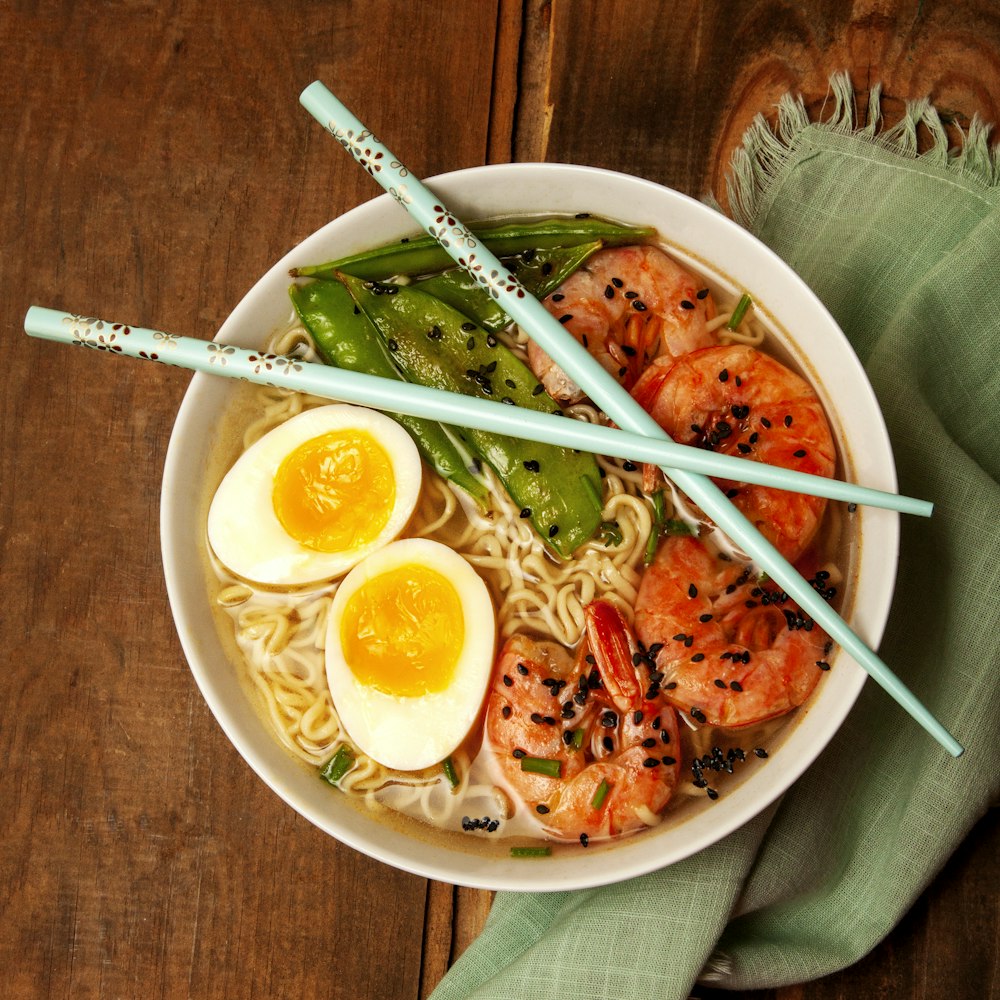
Today, we are in the middle of a "Ramen Renaissance." Instant noodles are no longer just a "boil and serve" affair; they have become a foundational component of sophisticated meal prepping. Fitness enthusiasts and busy professionals are now using the humble noodle brick as a base for high-protein, veggie-packed lunches that rival local cafe offerings.
The modern meal-prepper views the instant noodle pack as a "blank canvas." The goal is to keep the convenience of the 3-minute base while transforming the nutritional profile into a balanced meal. The versatility of these noodles allows them to absorb flavors from any broth or sauce, making them perfect for batch-cooking. By pre-portioning protein and fresh aromatics, you can turn a basic commodity into a high-end, customizable culinary project.
4. Global Variations: Beyond the Original
It is important to recognize that "instant ramen" is not a monolith. Across the globe, different regions have adapted the noodle to suit their local flavor profiles. In Korea, the market is dominated by Shin Ramyun, which is famous for its spicy, thicker, and chewier noodles designed to be boiled for longer periods. In Southeast Asia, you will often find varieties like Mi Goreng, which are prepared without broth, relying on fried-noodle seasoning oils and sweet soy sauce (kecap manis).
In the West, we are seeing the rise of "fusion ramen," where companies are integrating local ingredients—such as chili-lime seasoning or roasted garlic-infused oils—directly into the packets. These variations prove that the instant noodle has become a vessel for global cultural exchange, allowing cooks to experiment with regional spices without needing access to specialized ingredients at a local market.
5. Expert Hacks for Your Ramen Bowl
To move from survival mode to a gourmet experience, try these techniques commonly used by chefs:
The "Creamy Hack" involves whisking the seasoning packet with an egg yolk, a tablespoon of Japanese mayo, and grated garlic in your bowl before adding the hot, starchy noodle water. This creates a rich, emulsified broth that mimics the texture of authentic Tonkotsu ramen without the 24-hour boiling process.
6. Balancing the Bowl: Nutritional Strategies
While instant ramen is convenient, it is frequently criticized for its high sodium content and lack of fiber. In 2026, the smartest way to enjoy your bulk stash is by "buffering" the bowl with nutrient-dense additions:
| Component | Benefit | Examples |
|---|---|---|
| Protein | Satiety and muscle repair | Soft-boiled eggs, rotisserie chicken, tofu |
| Fiber | Offsets glycemic load | Bok choy, spinach, shredded carrots |
| Healthy Fats | Increases flavor depth | Sesame oil, chili crisp, tahini |
If you are concerned about sodium, use only half of the seasoning packet provided. Replace the other half with low-sodium chicken or vegetable stock and a splash of miso paste or soy sauce. This allows you to control the "umami" levels without relying on the high-sodium industrial seasoning mix.
7. The Future of the Noodle
The instant noodle industry is currently undergoing a massive transformation driven by the demand for health and sustainability. Innovations in 2026 include air-dried technology, which reduces the calorie density and increases the "chew" of the noodles. Manufacturers are also adding protein isolates and fiber to the noodle dough itself to create a more nutritionally complete product.
Whether you use it as a nostalgic comfort food or a strategic part of your weekly lunch prep, the evolution of ramen is a testament to how humble ingredients can change the world. By treating that "survival food" as a canvas for creativity, you aren't just making a meal—you are participating in a global legacy of food innovation.
Comments
Post a Comment