Walk into any airport electronics kiosk or metropolitan retail corridor, and you will see the exact same visual landscape: gleaming glass cases showcasing premium wireless audio hardware. From the instantly recognizable bold “b” stamped onto Beats Studio Pro models to the sleek industrial minimalism of Apple, Sony, and Bose, these consumer status symbols carry retail price tags scaling anywhere from $250 to over $550.
The marketing apparatus surrounding these legacy platforms delivers a fierce, unyielding psychological baseline narrative: high retail prices buy acoustic perfection, military-grade structural lifespan, and bespoke internal engineering. Yet, beneath the pristine anodized aluminum coats and glossy lifestyle marketing lookbooks, a quiet industrial reality has solidified. Today's hyper-optimized global technology supply chains have completely democratized luxury acoustics.
1. The Component Illusion: Shared Global Factory Baselines
To understand why a $50 pair of boutique or localized online-brand headphones can mechanically match a $350 legacy luxury ecosystem option, one must peel back the outer cosmetic shell. The consumer audio landscape relies heavily on Original Design Manufacturers (ODMs) and system integrators situated throughout major industrial manufacturing clusters like Shenzhen and Dongguan.
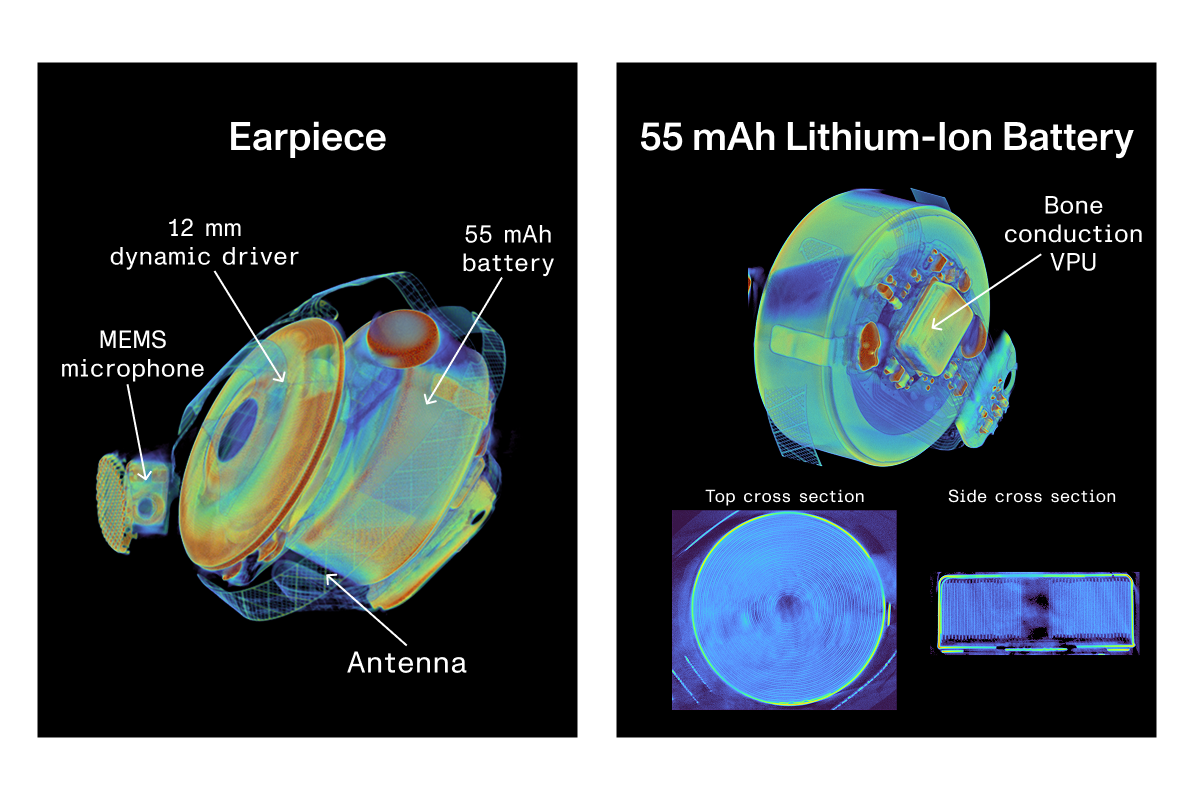 Figure 1: A CT scan of the Nothing Ear (3) to see what makes it a genuine competitor to the AirPods Pro 3. The 12mm dynamic driver, bone conduction VPU, three MEMS microphones per earbud, and the dual-mic Super Mic array built into the case give it a feature set that punches well above its price. All of that for $179. See our reel for the full comparison. 🎧
When a massive premium brand sketches a new pair of headphones, they rarely forge completely new, foundational scientific hardware components from absolute scratch. Instead, they buy the same core internal architecture—such as Bluetooth audio system-on-chips (SoCs) from Qualcomm or MediaTek, and composite diaphragm copper voice coil configurations—as smaller, localized white-label operations.
This means that while the premium badge invests millions into global celebrity sponsorships, television ad buying campaigns, and custom injection-molded luxury travel carrying cases, the local brand focuses capital strictly on the raw bill of materials (BOM). When you buy the elite asset, you are frequently paying a 500% to 800% financial markup directly designated to cover corporate marketing overhead rather than tangible, physical acoustic superiority.
Two-way driver architecture in modern TWS: enabling next-generation acoustic performance

2. EXPOSED: The Rampant Scams Infiltrating the Headphone Industry
The discrepancy between price and value is bad enough, but the personal audio market is also plagued by calculated industrial deceptions designed to exploit consumer ignorance. Buying premium headphones has become an absolute minefield of misleading tech specifications.
Scam 1: Hidden Dead Weight Blocks
Independent hardware teardowns have historically revealed structural balancing secrets inside popular premium plastic lifestyle headphones. Engineers have regularly found localized zinc or cast-iron weight plates hidden inside empty ear cup chambers for the sole purpose of making the headphones feel heavier. Because the human brain instinctively equates physical mass with premium construction, this is a psychological parlor trick used to make a $10 assembly of injection-molded plastic feel like an elite piece of industrial engineering.
Scam 2: Fake "Hybrid" Driver Claims
Many brands advertise multi-driver systems, claiming to include "dual-balanced armatures" or "hybrid dynamic drivers" to separately process bass, mids, and highs for studio clarity. In reality, multiple technical teardowns have caught manufacturers using completely non-functional dummy drivers inside the housing. The extra drivers are wired to absolutely nothing—they are completely inert plastic shells tucked behind the mesh to justify adding an extra $150 to the retail box sticker price.
Scam 3: The "Phony ANC" Frequency Trap
Active Noise Cancellation (ANC) is the primary marketing battleground of modern personal tech. Many mid-tier and premium fashion brands claim extreme decibel reduction metrics (e.g., "Up to 45dB of Quiet Zone Reduction"). What they hide in the fine print is that this isolation occurs only at a single, hyper-specific high frequency that is already mostly blocked by the physical ear pad. The lower-frequency rumbles (airplane engines, city traffic) are barely touched because the brand skimped on internal feed-forward microphone hardware.
3. Acoustical Convergence: The Equalization Factor
Historically, legacy brands held a legitimate competitive advantage in frequency tuning and custom acoustic engineering. Decades of specialized laboratory research allowed elite houses to shape beautiful, warm sound profiles that budget operations simply could not replicate using rudimentary tooling equipment.
The rise of advanced digital signal processing (DSP) has completely destroyed that competitive moat. Modern bluetooth micro-controllers allow direct, surgical control over target frequency tuning curves. Using standard, open-source target curves—like the globally respected Harman Target Signature—smaller local engineering houses can calibrate budget drivers to sound virtually indistinguishable from premium options to the human ear.

Whether it is punchy sub-bass delivery, clear mid-range vocal separation, or crisp treble response, affordable local alternatives (such as Anker Soundcore, EarFun, or localized regional market leaders) regularly secure top critical marks from expert audiophile testing benches, frequently outperforming expensive fashion-first options on absolute tonal accuracy.
4. The Lifespan Equation: Why Synthetic Leather Fails Equally
Perhaps the most frustrating reality of the personal tech lifestyle is the structural decay paradox: spending more money does not protect your hardware from the fundamental physics of daily wear and tear. In fact, premium models regularly deteriorate at the exact same tempo as budget options due to shared soft-good material sourcing constraints.
The Material Breakdown Truth
The primary point of physical failure on almost any pair of over-ear headphones is the headband wrapping and ear cushion array. To maximize out-of-box comfort, both premium lines and local budget options rely heavily on thin layers of polyurethane-based synthetic leather (protein leather) backed by soft memory foam cores.
Regardless of whether the box costs $350 or $45, protein leather is chemically susceptible to human skin oils, sweat acidity, and room humidity parameters. Within 18 to 36 months of active daily use, the synthetic outer layer will inevitably begin to crack, flake, and peel away. Because legacy luxury brands treat ear cushions as custom, integrated design features, acquiring official replacements can be excessively expensive, whereas budget or open-market brands utilize standard generic attachment slots that cost pennies to maintain over time.
5. Technical Teardowns and Audio Analysis
To view exactly how premium consumer audio lines compare against highly competitive, low-cost market disruptors on internal build quality and acoustic performance metrics, watch the physical teardowns and audio testing labs directly below:
6. Industrial Blueprint Economics Matrix
The following detailed comparison demonstrates exactly where your investment dollars travel when buying premium status vs. localized utilitarian value alternatives:
| Analysis Category | Premium Fashion Brands ($250+) | Optimized Budget Brands ($40-$80) |
|---|---|---|
| Primary Cost Drivers | Celebrity Endorsements, Global Marketing, Retail Placement | Raw Electronic Components, Direct Logistics Pipelines |
| Internal Bluetooth SoC | Custom Silicon or Premium Qualcomm Silicon | Qualcomm, Realtek, or MediaTek High-Grade Silicon |
| ANC Performance | Custom software-tuned profiles (Top Tier Isolation) | Hybrid ANC array integrations (Highly Comparable) |
| Hidden Elements | Frequent inclusion of dead weights to mimic luxury feel | Hollow design optimized strictly for lightweight comfort |
| Repair & Part Sourcing | Proprietary channels, high repair fees | Universal open market components, cheap swaps |
7. Navigating the Market: Smart Purchasing Strategy
Breaking free from the brand premium trap does not require sacrificing your love for high-fidelity audio or daily lifestyle conveniences. It simply demands shifting your evaluation framework from status markers to structural realities:
What Premium Labels Excel At:
Premium options still retain small edge-case advantages in seamless system ecosystem integration (like Apple's instant H1 chip switching), absolute peak custom active noise-cancellation depth algorithms, and immediate high-society prestige recognition value in professional spaces.
The Smart Consumer Solution:
If your daily priority is high-quality commuter audio, stable battery life, reliable workouts, and an acoustic profile that keeps you energized without breaking the bank, buy from optimized local or direct-to-consumer tech brands. Keep your money in your pocket, skip the status markup, avoid hidden industry deceptions, and treat your personal audio as an agile, evolving tool.
Comments
Post a Comment